Movement for Every Body: The New Case for Age-Inclusive Fitness
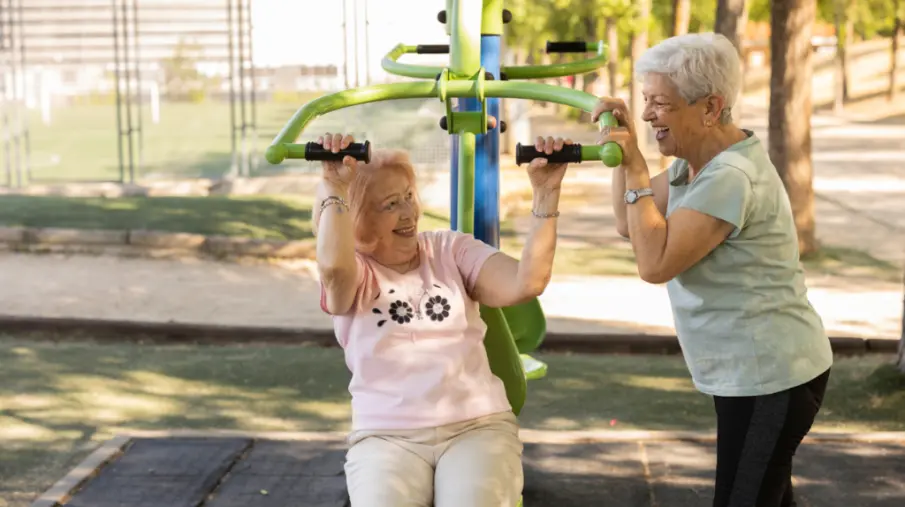
There is a particular kind of stubbornness built into the fitness industry's self-image. For decades, its marketing has centered on youth: tight bodies, peak performance, visible muscle, the kind of aesthetic that communicates to a viewer that this product is meant for people who are already fit, already young, already motivated. The implicit message to everyone outside that frame — older adults, children, people with limited mobility — has been fairly consistent: this is not really for you.
That message is losing its coherence, not because of corporate benevolence, but because the demographics of the actual market for fitness services do not match the image the industry has sold of itself. The United States has an aging population that is, by every measurable indication, interested in staying physically capable as long as possible. It has a child population in the middle of a well-documented physical activity crisis. And it has a middle generation caught between caring for both while trying to maintain their own health.
Age-inclusive fitness is not a niche. It is the accurate description of what fitness actually has to become if it wants to serve the real population — the full range of bodies, life stages, and geographical contexts — rather than an idealized version of who the industry wishes its customer were.
The Senior Fitness Revolution Nobody Talked About
The story of fitness for older adults has quietly become one of the most significant in public health. What was once a footnote — perhaps a gentle stretching class tacked onto the end of an aerobics session — has grown into a sophisticated and evidence-backed field of practice with its own certifications, its own research base, and its own community of dedicated practitioners who understand that aging and physical capability do not have to be synonymous.
The research on the relationship between strength training, balance work, and longevity outcomes in older adults is now substantial enough to inform clinical practice. Falls are the leading cause of injury death in adults over 65. Sarcopenia — the age-related loss of muscle mass — accelerates nearly every other dimension of physical decline. Both can be meaningfully slowed, and in some cases reversed, with appropriate, consistently applied exercise.
The practice of Chair Yoga for Seniors has emerged as one of the more accessible entry points into movement for older adults managing arthritis, balance issues, post-surgical recovery, or simply a lifetime without formal exercise. The modified format meets the body where it actually is, rather than where a standard yoga class assumes it should be. Seated postures reduce fall risk while still delivering meaningful improvements in flexibility, core engagement, and breath awareness. It is a format that requires no prior fitness history and imposes no appearance standard — both of which matter considerably for a population whose relationship with exercise was shaped by a far less inclusive era of wellness culture.
The growth of senior-focused fitness programming has also surfaced a telling truth about what people at that life stage actually want from a program. It is not aesthetics. It is capacity — the ability to carry groceries, play with grandchildren, manage stairs, and live independently for as long as possible. Programs that are honest about delivering those concrete outcomes tend to build the kind of loyalty and consistency that the mainstream fitness industry has never quite figured out how to earn.
Fitness for Kids: Building the Foundation Early
At the other end of the age spectrum, the case for structured physical activity for children has never been better supported. The research connecting early physical literacy to academic performance, mental health outcomes, and long-term activity levels is extensive and consistent. Children who develop foundational movement skills — the ability to jump, balance, coordinate, throw, and carry — are better positioned in almost every dimension of development that researchers have studied.
Yet the infrastructure for delivering quality movement education to children has been eroding for decades. Recess time has been cut. Physical education has been defunded in many districts. Organized sports, while valuable, have become expensive enough that meaningful participation is increasingly stratified by family income. The gap between what children need and what the existing system delivers is well-documented and, in many communities, still growing.
Programs built around Fitness for Kids and grounded in developmental science rather than just supervised play address this directly. They understand that building physical competence in children is a sequenced process — you cannot teach a complex skill before the foundational patterns it depends on are established. They also understand that a child's motivation to engage with physical activity is shaped as much by the social environment of the program as by the content of the curriculum itself.
A culture that celebrates effort rather than appearance, that makes trying something hard feel safe rather than embarrassing, is laying a foundation that organized sports — for all their genuine benefits — often struggle to replicate consistently. The social dimension of children's fitness is not a soft add-on. It is central to whether a child develops a relationship with movement that lasts.
Technology and the Democratization of Skill
For the middle generation, the challenge is not primarily access to physical activity — it is access to quality instruction. Professional coaching has historically been expensive, location-dependent, and socially coded in ways that made it feel exclusive. The person who could afford a good personal trainer and lived near a good facility was fortunate. Everyone else figured things out from YouTube videos and gym floor observation, with predictably uneven results.
The emergence of a purpose-built kettlebell app as a serious fitness coaching platform has changed this calculus in meaningful ways. The best products in this category do more than stream exercise videos. They deliver progressive programming, technique cueing, community accountability, and adaptive feedback in a package that travels with the user, requires minimal equipment, and scales in cost in a way that professional coaching in a physical location cannot.
Kettlebells are particularly well-suited to this digital format because the movement vocabulary is finite and learnable. There are perhaps fifteen to twenty foundational patterns that cover the vast majority of what kettlebell training delivers, and each of them can be coached effectively through carefully designed video instruction when the programming and feedback loops are built with rigor. The result is coaching that was previously available only to people who could afford to work one-on-one with a specialized practitioner, now accessible to a much broader population.
The social features of the better products in this space also merit attention. Community boards, challenge formats, and coach interaction have produced online fitness communities with genuine cohesion — people who have never met in person but who hold each other accountable and celebrate each other's progress. That kind of social reinforcement is one of the most reliable predictors of long-term exercise adherence.
The Mobile Fitness Gym and the Geography of Access
Technology solves some access problems and leaves others untouched. A fitness app is useless without equipment, and even kettlebells represent a barrier for households managing constrained budgets. The geography problem is more resistant still: a smartphone does not fix the absence of any fitness infrastructure in a rural county or an economically isolated neighborhood.
The concept of the mobile fitness gym addresses the geography problem directly. By bringing professional equipment and qualified instruction into communities rather than waiting for those communities to come to a facility, the model eliminates the transportation and infrastructure barriers that have historically excluded large populations from professional fitness services.
What distinguishes a well-operated mobile fitness gym from a converted van with some weights in it is the quality of programming and professional engagement on offer. The best operations bring structured group classes, individualized instruction, and consistent scheduling to neighborhoods that have never had any of these things. They establish presence over time, which allows for the community relationships and accountability structures that turn a one-time class into a sustained behavior change.
For older adults in particular, the mobile fitness gym can reach a population that may be geographically isolated and no longer able to drive. For children in schools without physical education budgets, a mobile operation on school grounds can fill a gap that the institution itself can no longer fill. The format's flexibility — its ability to go where the need is rather than waiting for the need to come to it — is its defining virtue.
What Age-Inclusive Fitness Actually Means
The phrase age-inclusive fitness risks sounding like marketing language — a feel-good umbrella term for a set of demographic accommodations bolted onto an industry that has not fundamentally changed. The reality being described here is different and more substantive.
When a senior with balance limitations finds a form of movement that she can do safely and that makes her measurably stronger, that is not accommodation. That is appropriate design. When a child develops a genuine love of physical activity in a program that understands how children learn, that is not a nice extra. That is long-term public health investment. When a working adult in a rural area gains access to structured strength training through a well-designed digital program or a mobile service, that is not filling a niche. That is expanding the definition of who fitness serves.
The fitness industry's traditional self-image — built around images of optimal performance, visible aesthetics, and peak-age bodies — was always incomplete. The work of the next decade is building the infrastructure to make the actual definition real: movement, for every body, at every stage of life.
Previous Posts: